Every January brings a fresh wave of AI predictions, most of which don't matter to a real business trying to get work done. This is the short list that does. Four shifts are genuinely changing how UK companies operate in 2026 — here's what each one means in plain terms, and what a typical UK SME should actually do about it.
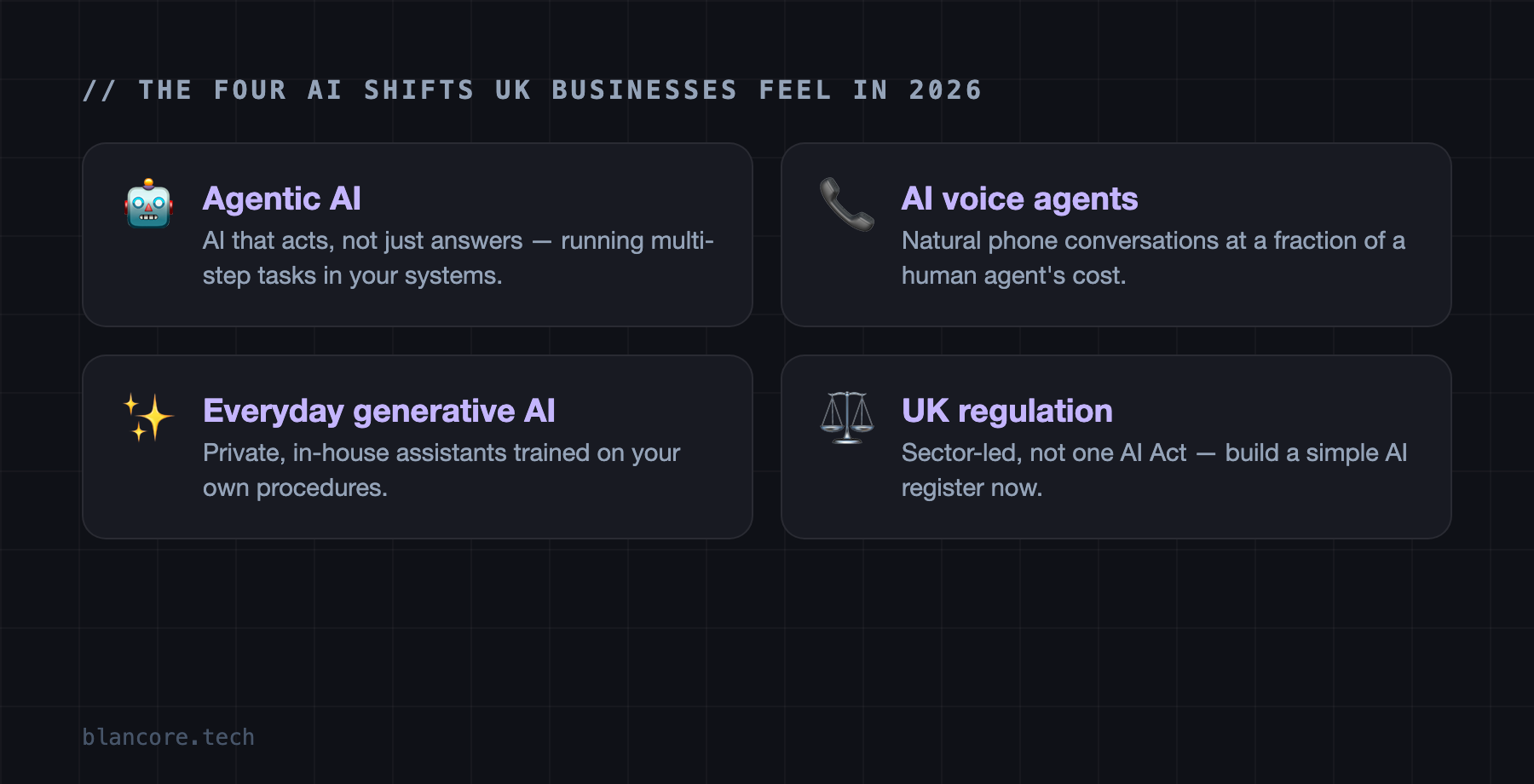
1. Agentic AI: from answering to acting
The biggest shift is from AI that advises to AI that acts. "Agentic" AI describes systems that don't just answer a question but carry out a multi-step task — reasoning, planning, and using your business software to get it done. Instead of suggesting a reply, an agent can read the request, check your calendar, book the slot, and log it in your CRM.
Analysts expect a large share of business applications to include task-specific AI agents by the end of 2026. The practical implication isn't "buy an agent" — it's to stop thinking about AI as automating one isolated task and start looking at whole workflows that could run with a human supervising rather than doing.
What to do: pick one end-to-end workflow that's currently a chain of manual steps, and pilot an agent to run it with a named human owner checking its work. Keep the mandate narrow and the oversight real. This is exactly the shape of our AI solutions engagements.
2. AI voice agents: the phone finally works again
Voice AI has crossed a quality threshold. Modern agents hold fluid, natural phone conversations — handling interruptions, coping with regional accents, and writing a structured summary into your systems while they talk. They no longer feel like the robotic phone menus everyone hates.
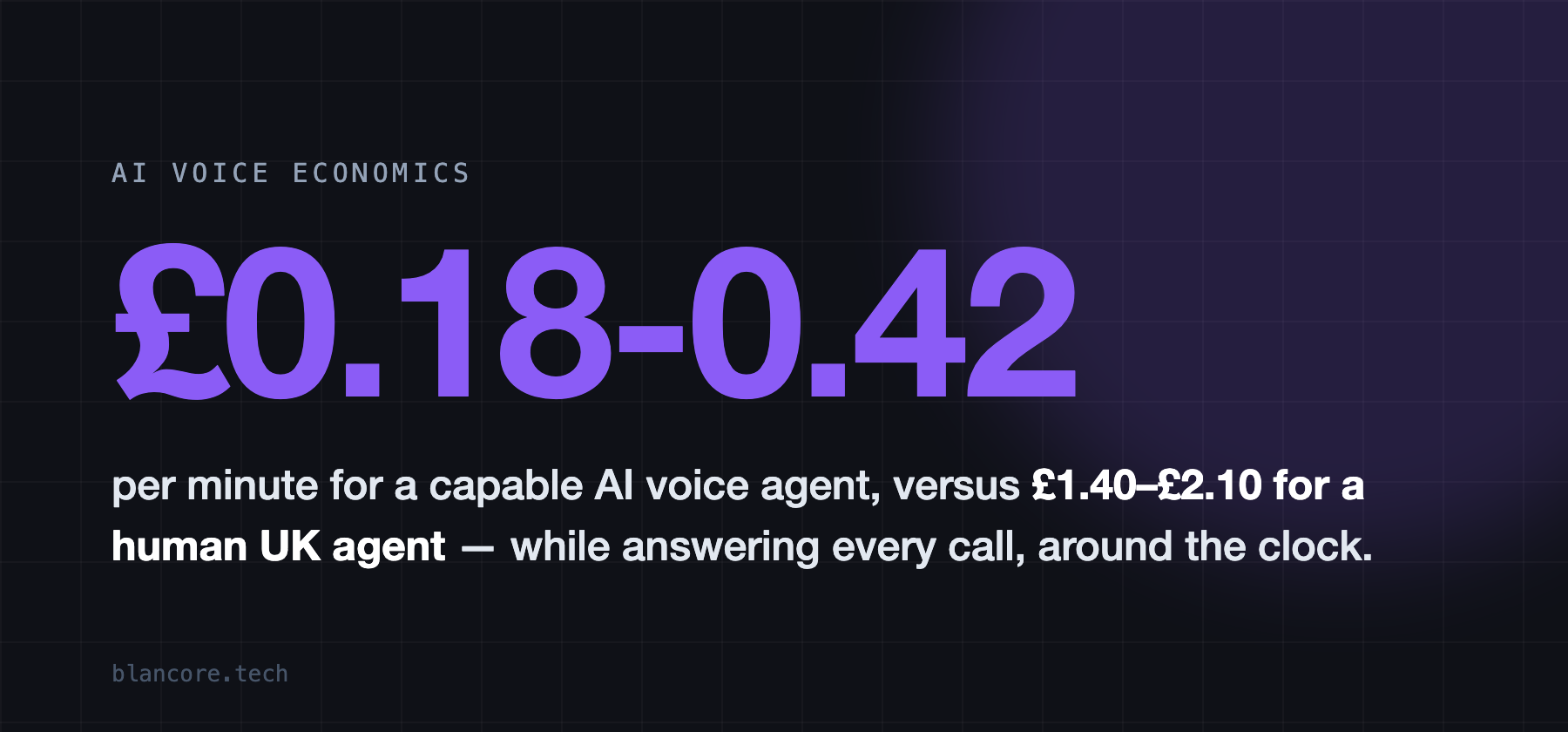
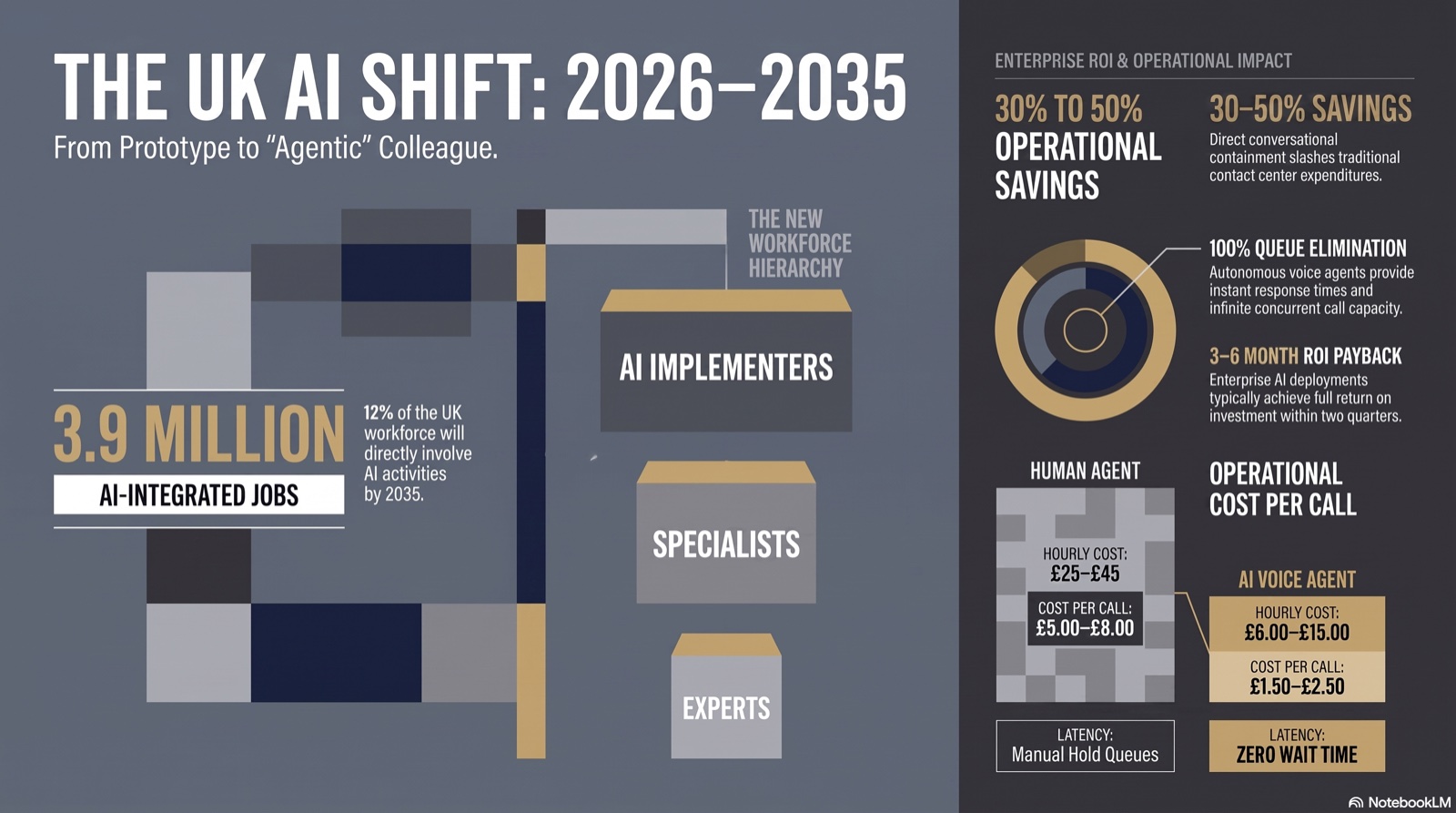
The economics are what make this a 2026 story rather than a someday story. A capable voice-AI platform reportedly runs in the region of £0.18–£0.42 per minute, against roughly £1.40–£2.10 for a human UK contact-centre agent — while answering every call, at any hour. Adoption among UK businesses is climbing quickly.
There's a catch worth stating plainly: many impressive platforms are US-built and quietly fail UK compliance. Deploying voice AI here means clearing real gates — Ofcom's rules on caller identification, the ICO's PECR rules for unsolicited marketing calls, and UK GDPR consent. In regulated sectors, the FCA's Consumer Duty effectively requires an audit-ready transcript of every call.
Don't buy a voice platform that can't natively log auditable UK compliance evidence for every interaction. In this country, that isn't a nice-to-have.
What to do: start with high-volume, repetitive calls — appointment bookings, payment reminders, out-of-hours reception — and vet vendors relentlessly on UK data residency and compliance. Our AI phone agents are built for exactly this, on UK numbers with GDPR-compliant call handling, and there's a live demo you can call to judge the quality yourself. To size the opportunity first, the missed-call cost calculator shows what unanswered calls are already costing you.
3. Everyday generative AI moves in-house
Generative AI has quietly become part of daily work — a large majority of UK professionals now use it in some form, saving a couple of hours a week each on average. The 2026 shift is where it lives: businesses are moving from public web tools to private, in-house assistants trained on their own procedures, policies, and past decisions, so staff can retrieve company-specific answers instantly and safely.
The main barrier isn't the technology — it's the skills gap. A majority of SMEs cite it as the reason they're not getting real value. Buying the tool is the easy 10%; teaching the team to use it well is the other 90%.
What to do: improve data quality in one high-value area rather than trying to tidy everything, use that clean data to build an internal assistant your staff can query, and invest in a little AI-literacy training so people actually adopt it. Connecting a private assistant to your existing tools is a systems-integration job as much as an AI one.
4. UK regulation: sector-led, and moving
Unlike the EU, the UK has deliberately chosen not to pass a single sweeping "AI Act". Instead it's taking a pro-innovation, sector-led approach — pushing AI oversight down to the regulators you already deal with: the ICO for data, the FCA in finance, Ofcom in communications, and others. The rules around automated decision-making under UK GDPR are being reformed, and the ICO is developing dedicated guidance for AI data processing.
Two things catch UK businesses out. First, "shadow AI" — the AI features quietly switched on inside the SaaS tools you already pay for, often processing personal data without anyone deciding it should. Second, reach: if you have customers in the EU, the EU AI Act can apply to you regardless of UK law.
What to do: don't wait for a central law that isn't coming. Build a simple AI register — an inventory of every AI system your business uses, including the ones embedded in existing tools — map each to its relevant regulator, and keep a lightweight, documented note of how you handle the data. It's an afternoon's work that saves a great deal of stress later.
The through-line
None of this requires a moonshot. The businesses getting ahead in 2026 aren't the ones chasing every trend — they're the ones picking the one or two shifts that touch their real bottlenecks and acting on those, with a human in the loop and the data kept in order. If you're not sure which one is yours, that's a good first conversation to have. Our guide to choosing an AI agency is a sensible next read.
Sources & further reading
Adoption, cost and productivity figures reflect UK industry surveys and are indicative; regulatory points reference official UK guidance. Always confirm current obligations for your sector before deploying.
Frequently asked questions
Keep reading
Have a project in mind?
Tell us what you're trying to solve and we'll come back within 24 hours — no hard sell.
Start a Conversation