An AI agent is AI software that doesn't just answer questions — it takes actions to complete tasks for you. Where a chatbot tells a caller your opening hours, an agent can check your calendar, book the appointment, and log it in your CRM. In a sentence: a chatbot talks; an agent does. That shift is the biggest thing happening in business AI right now.
AI agent vs chatbot: the key difference
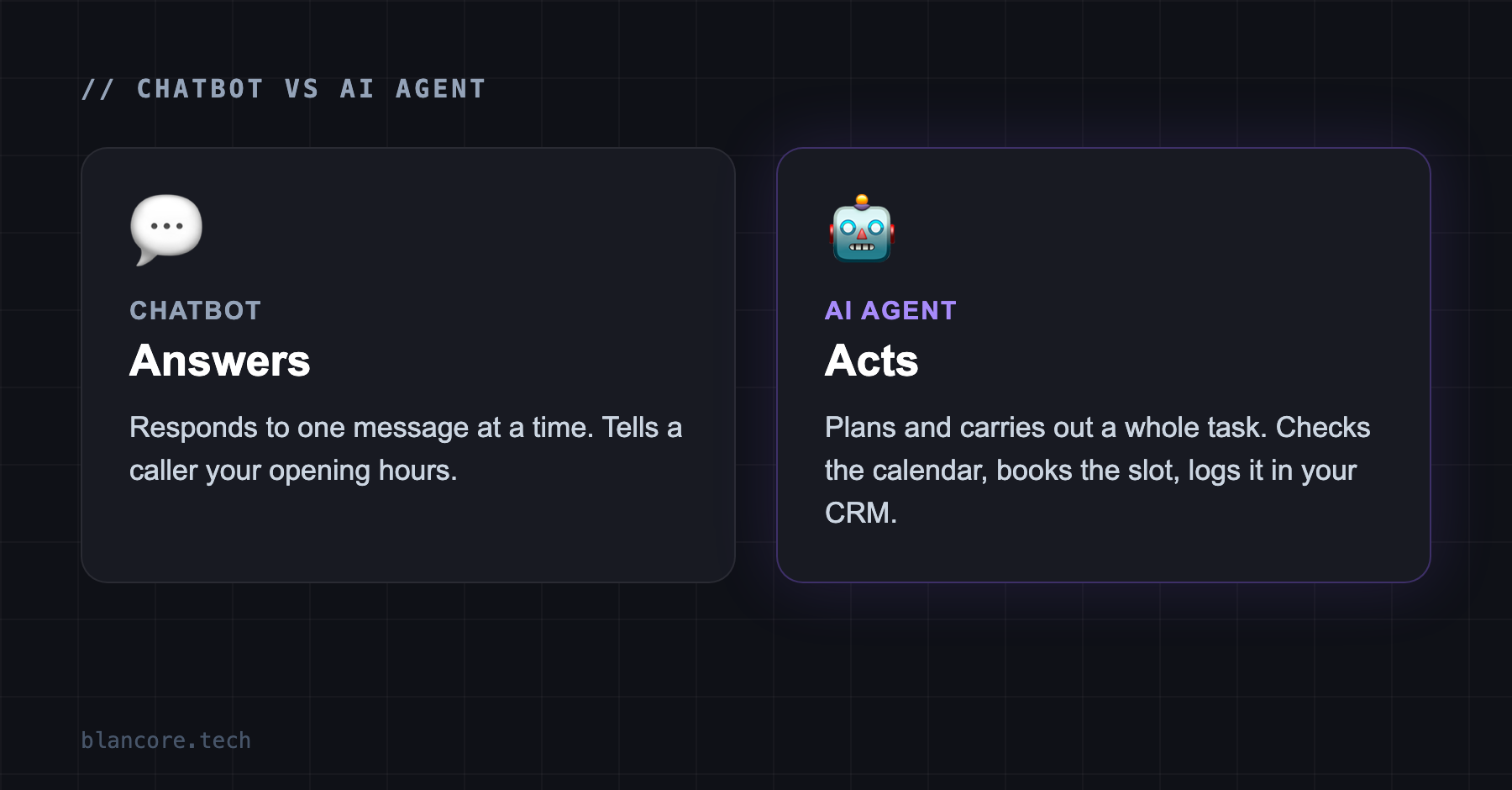
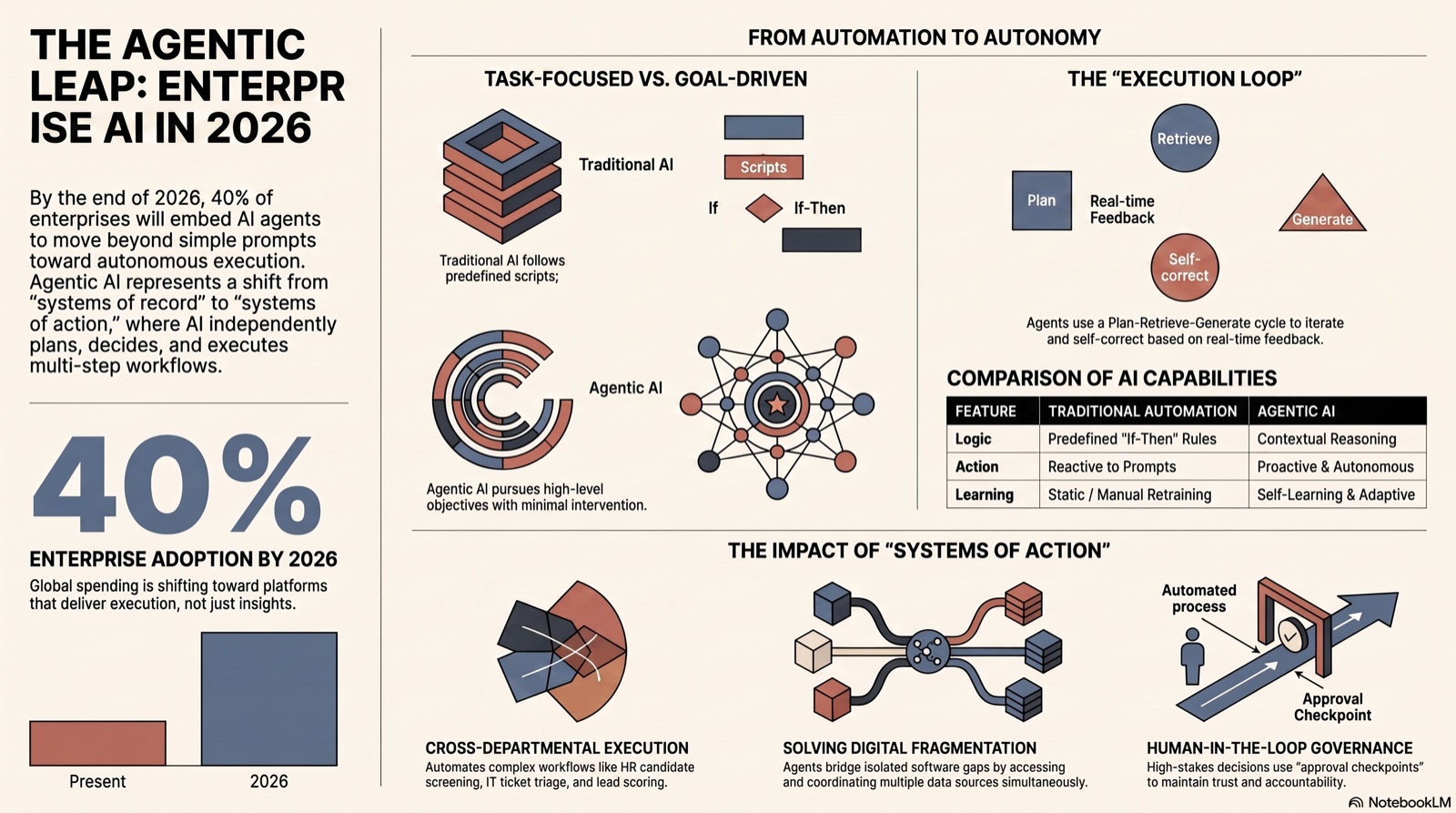
A traditional chatbot follows a script and responds to one message at a time. An AI agent can reason about a goal, plan the steps, and use your software to carry them out — checking information, making decisions, and completing a multi-step job with minimal hand-holding. It's the difference between a tool that answers and a colleague that acts.
So what is "agentic AI"?
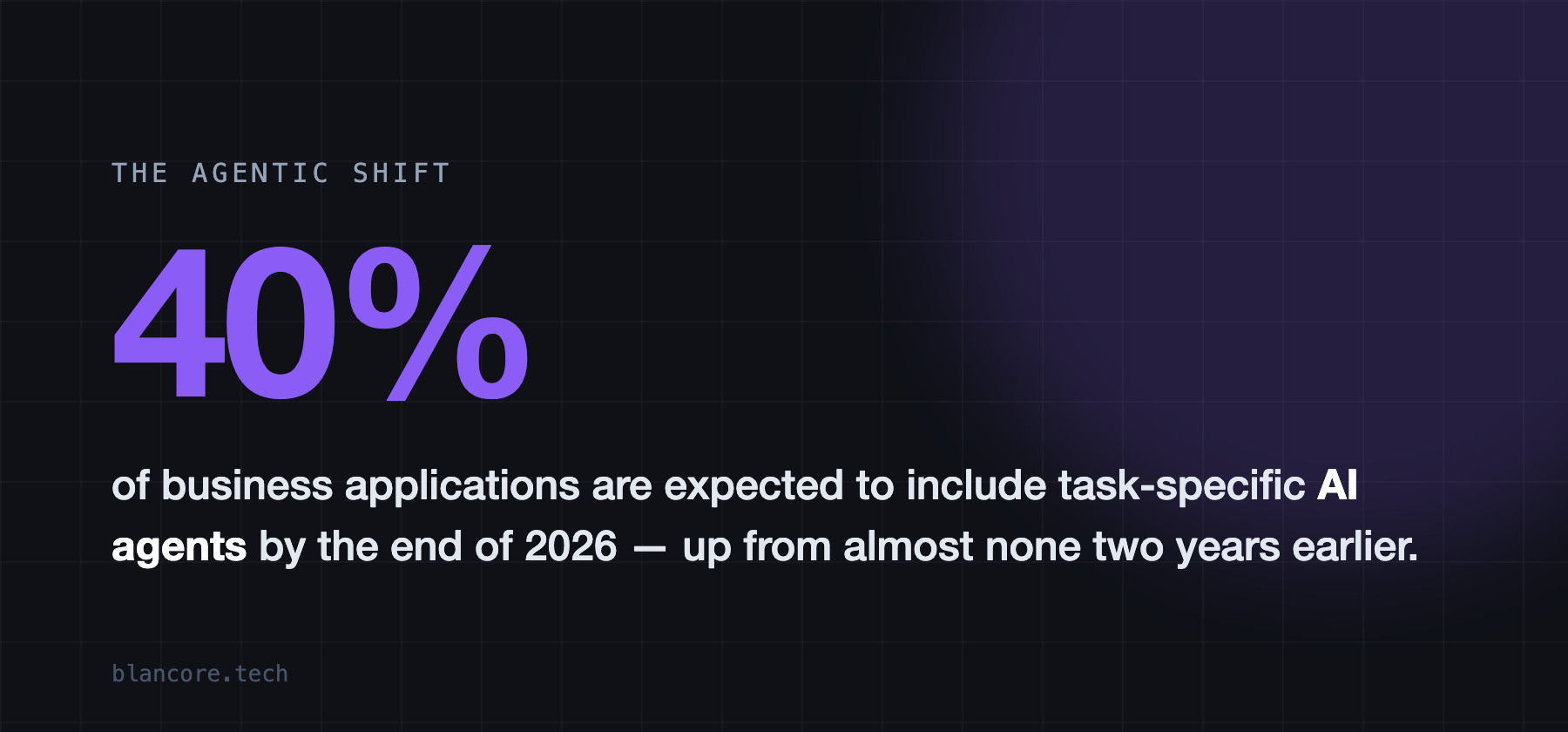
"Agentic AI" is just the broader term for this capability: AI systems that can plan and execute tasks on your behalf rather than only responding to prompts. An "AI agent" is one such system. You'll hear the phrase a lot in 2026 because it's where the technology — and the investment — is heading.
What can an AI agent actually do?
Concrete, real-world examples for a business:
- Answer and handle phone calls — our AI phone agents greet callers, qualify them, book appointments and hand over to a person when needed.
- Process enquiries end-to-end — read an incoming request, gather the details, update your systems, and reply.
- Handle documents — extract data from invoices or forms and file it where it belongs.
- Run routine workflows — the multi-step admin jobs that currently need a person clicking between screens.
The common thread: an agent doesn't just advise, it completes the task — within limits you define.
How do AI agents work with your business?
An agent doesn't replace your software — it works across it. It uses your existing tools (calendar, CRM, phone system, accounting) to get things done, which is why integration matters: an agent is only as capable as the systems it can reach. Think of it as a layer that acts on top of the tools you already have.
Are AI agents safe? And what are the limits?
An agent with a narrow, well-defined mandate is low-risk. An agent given unchecked power is not. The safety is in the scoping.
Used well, agents are safe: you define exactly what they may and may not do, keep a human in control of high-stakes decisions, and build to UK GDPR. The limits are real too — agents work best on well-defined, repeatable tasks, and they should escalate to a person when a job needs genuine judgement. The goal isn't to remove humans; it's to remove the repetitive work around them.
The bottom line
An AI agent is the practical face of the 2026 AI shift — AI that acts, not just answers. For most businesses the smartest first step is a single, well-scoped agent on a high-friction task (answering calls is a common one), proven small before you expand. If you'd like the wider context, our guide to AI trends for 2026 puts agents alongside the other shifts worth knowing — and our AI work is where we help businesses put one to work.
Sources & further reading
Forecasts on agent adoption reflect widely-reported analyst research and are indicative. For the UK regulatory context around automated systems, see the ICO and GOV.UK.
Frequently asked questions
Keep reading
Have a project in mind?
Tell us what you're trying to solve and we'll come back within 24 hours — no hard sell.
Start a Conversation